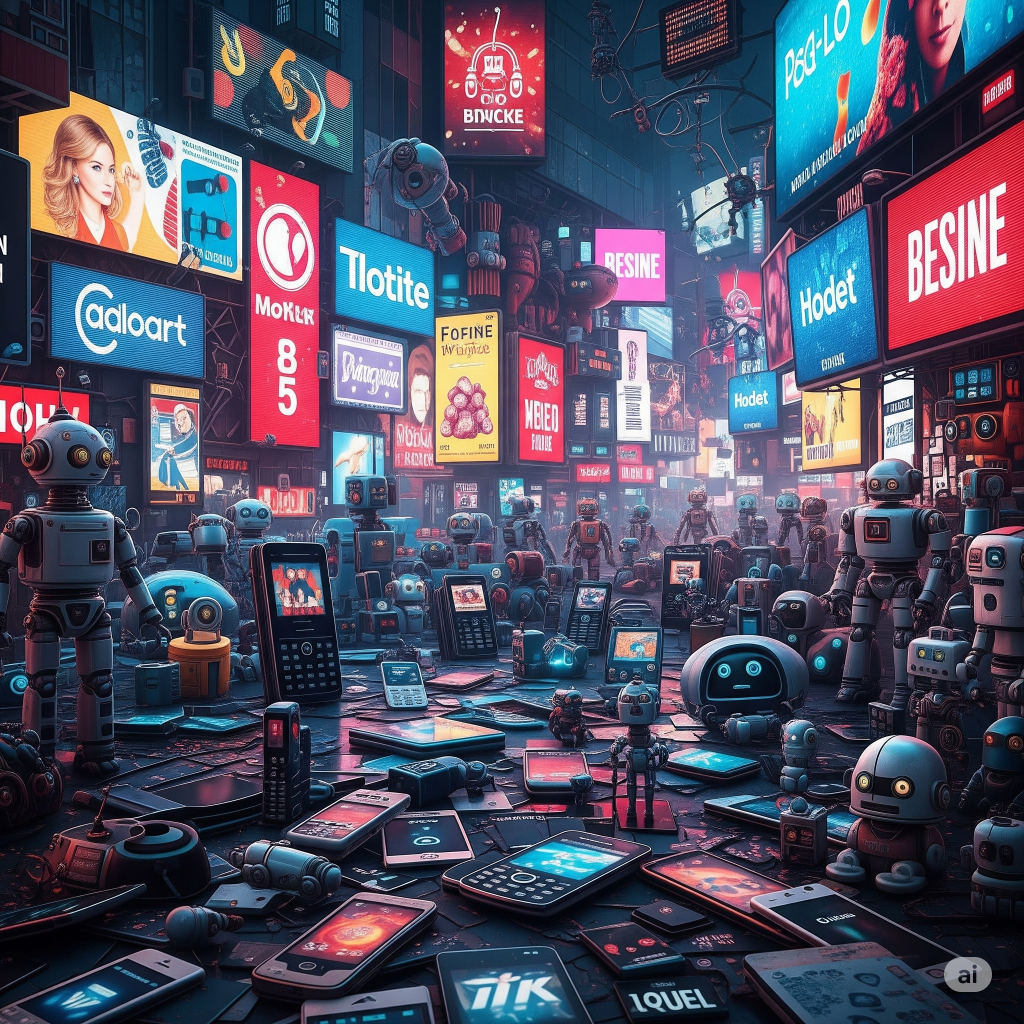
The AI Startup Bubble: From Marketing Hype to Personalized Intelligence

It feels like I can’t scroll for more than a minute without being served another one. A slick, fast-cut Instagram ad promising to revolutionize my life with artificial intelligence. One moment, it’s a tool that will turn my scattered video clips into a viral-worthy masterpiece, complete with perfectly synced, AI-generated background music. The next, it’s an app that writes my emails, designs my presentations, or even generates a photorealistic avatar of me as a Roman emperor. They all share the same breathless marketing copy and the same audacious claim: they are built on “the best A.I.”

As someone who has followed the field for years, I find this “Cambrian explosion” of AI startups to be both fascinating and deeply cynical. It’s a digital gold rush, and every developer with access to an API from OpenAI, Anthropic, or Google is seemingly staking a claim. They build a user-friendly interface—a wrapper—around a large language model (LLM) or a diffusion model, brand it with a futuristic name, and flood social media with ads. The barrier to entry isn’t building a foundational model, which costs billions; it’s building a slick user experience and having a hefty marketing budget.

And the money is pouring in. Depending on which market analysis you read, the generative AI market is already pulling in tens of billions of dollars in revenue in 2025, with some projections from groups like Bloomberg Intelligence estimating it could swell to over a trillion dollars within the decade. Every subscription fee, from the $9.99/month for an AI writing assistant to the $29.99/month for an advanced video editor, is a drop in this ever-growing bucket. The ads are relentless because the potential payoff is astronomical.

But this gold rush has a significant and messy byproduct: the pervasive and ever-growing mountain of “AI slop.” It’s everywhere. It’s the SEO-optimized blog posts that are grammatically correct but devoid of any real insight or human experience. It’s the bizarre, six-fingered hands and vacant eyes of AI-generated images that pollute forums and social feeds. It’s the generic, soulless background music in podcasts and YouTube videos. It’s the endless stream of automated comments on social media posts that say things like “This is a great point!” without a hint of context.

These tools, in their current state, are optimized for quantity, not quality. They lower the bar for creation, which in theory is democratic, but in practice often leads to a deluge of mediocrity. The incentive isn’t to create something meaningful; it’s to churn out content, to feed the algorithm, to simply produce. We’re drowning in a sea of plausible-sounding nonsense, and it’s making the digital world feel cheap, synthetic, and untrustworthy.

So, where do we go from here? While the current landscape is chaotic, I believe we’re in a necessary, if ugly, transitional phase. The future of AI, in my opinion, will not be defined by these generic, one-size-fits-all services all claiming to be “the best.” Instead, I see two critical directions emerging.

First is a move towards highly specialized, vertically-integrated models. An AI that is mediocre at writing emails, summarizing documents, and generating images is far less useful than three separate, highly-specialized AIs that perform each of those tasks with expert-level precision. We’ll see models trained specifically for legal contract analysis, for molecular biology, for semiconductor design, or for debugging a specific coding language. These won’t be consumer-facing toys but powerful, professional-grade instruments.

But the second direction is the one I find most compelling and, ultimately, more important. I believe the long-term future lies not with ever-larger, centralized models, but with smaller, personalized, and localized AI.

Imagine an AI that runs entirely on your own device, be it a phone or a laptop. It doesn’t send your data to a server in some far-off data center. It has been trained on a massive dataset, yes, but its true power comes from being fine-tuned on your data: your emails, your documents, your notes, your photographs, your chat history. It learns your unique style of writing, your specific vocabulary, the nuances of your professional relationships, and the context of your personal life.

When you ask this AI to draft an email, it won’t produce a generic corporate template; it will sound like you. When you ask it to find a photo, it won’t just search for “beach”; it will understand the implicit context and find that specific photo from your family vacation to the Outer Banks in 2019 that you were thinking of. This isn’t an AI meant to replace human creativity with a generic facsimile; it’s an AI designed to be a true digital assistant, an extension of your own mind and memory. It’s private, it’s efficient, and it’s authentically yours.

The current era of AI slop and overblown marketing is a feeding frenzy fueled by easy access to powerful but impersonal technology. The real revolution won’t be televised in a 30-second Instagram ad. It will arrive quietly, when our devices begin to understand us not as a generic user, but as an individual. That, to me, is the best A.I. worth waiting for.

Beyond AI: 2024’s Tech Breakthroughs That Didn’t Need Machine Learning

While Artificial Intelligence dominated headlines in 2024, the year saw a wealth of technological advancements that didn’t rely on algorithms and neural networks. These innovations spanned diverse fields, from medicine and energy to space exploration and consumer electronics. Here’s a look at some of the most noteworthy AI-free tech breakthroughs of 2024:
1. Brain-Computer Interfaces Take a Leap Forward:

Researchers at Stanford University and the BrainGate consortium achieved a remarkable feat in 2024, enabling a paralyzed patient to communicate at a record speed of 62 words per minute using a brain-computer interface (BCI). This breakthrough, utilizing implanted electrodes and sophisticated decoding software, offers renewed hope for individuals with severe speech impairments. While AI played a role in earlier BCI developments, this particular advancement focused on refining the signal processing and decoding techniques, demonstrating the power of bioengineering and neuroscience.

2. Quantum Computing Makes Strides:

Although still in its nascent stages, quantum computing witnessed significant progress in 2024. Companies like IBM and Google continued to push the boundaries of qubit technology, achieving greater stability and coherence. While practical applications remain on the horizon, these advancements lay the groundwork for future breakthroughs in fields like medicine, materials science, and cryptography. Notably, these advancements were primarily driven by progress in hardware and quantum algorithms, not by AI itself.  

3. High-Altitude Platform Stations (HAPS) Soar:

2024 saw increased interest in High-Altitude Platform Stations (HAPS), systems operating in the stratosphere to provide communication and observation capabilities. These platforms, which include balloons, airships, and fixed-wing aircraft, offer advantages over traditional terrestrial towers and satellites, particularly in remote areas. Advancements in solar power, battery technology, and lightweight materials have made HAPS a viable alternative for expanding connectivity and monitoring environmental changes.  

4. Elastocalorics: A Cool New Cooling Solution:

Elastocalorics, a cooling technology that utilizes the properties of shape-memory alloys, gained traction in 2024. These materials can absorb and release significant amounts of heat when deformed, offering a potentially more efficient and environmentally friendly alternative to traditional refrigeration. Researchers made progress in developing elastocaloric devices, paving the way for applications in air conditioning, electronics cooling, and even medical devices.  

5. Gene Editing with CRISPR Continues to Evolve:

CRISPR-Cas9 gene editing technology continued to advance in 2024, with researchers refining its accuracy and efficiency. While ethical concerns remain, CRISPR holds immense potential for treating genetic diseases and developing new disease-resistant crops. These advancements focused on improving the delivery and targeting of CRISPR systems, not on AI-driven applications.  

These are just a few examples of the many exciting technological advancements that emerged in 2024 independent of AI. While AI undoubtedly plays a transformative role in many fields, it’s important to recognize the continued progress driven by human ingenuity and scientific exploration across diverse disciplines.

Sources:

  • Brain-Computer Interface: Stanford University News Service, “Brain-to-text breakthrough: Paralyzed man sets record communication speed,” January 10, 2024.
  • Quantum Computing: IBM Research Blog, “IBM Unveils 1121-Qubit ‘Condor’ Processor, Pushing the Boundaries of Quantum Computing,” November 15, 2024.  
  • HAPS: World Economic Forum, “Top 10 Emerging Technologies of 2024,” June 26, 2024.  
  • Elastocalorics: ScienceDaily, “Elastocaloric Cooling: A Promising Alternative to Vapor Compression Refrigeration,” March 8, 2024.
  • CRISPR: Nature, “CRISPR technology: Applications and ethical considerations,” October 28, 2024.

AI’s Deep Impact: Reshaping Minds, Relationships, and Well-being in the Digital Age

Artificial intelligence (AI) is no longer a futuristic concept; it’s woven into our daily lives, influencing how we think, connect, and feel. From virtual assistants that streamline tasks to AI-driven therapy platforms, this technology is reshaping the human experience. But what does this mean for our mental health, relationships, and overall well-being?

Cognitive Shifts and Behavioral Adaptations

Research in cognitive science suggests that AI is subtly altering our cognitive processes. The constant stream of information from AI-powered devices can lead to shorter attention spans and a reduced ability to focus deeply on tasks. Moreover, our reliance on AI for decision-making may diminish our critical thinking skills, as we become accustomed to algorithmic guidance.

However, AI also offers cognitive enhancements. Tools like language learning apps and brain training games can improve memory and cognitive flexibility. AI-powered personalization algorithms can also curate information and experiences tailored to our individual preferences, potentially boosting engagement and learning.

Mental Health: Challenges and Opportunities

The rise of AI has sparked both concerns and optimism regarding mental health. On one hand, studies show a correlation between excessive social media use (often driven by AI algorithms) and increased rates of anxiety and depression. Additionally, the fear of job displacement due to automation can contribute to stress and feelings of insecurity.

Conversely, AI is revolutionizing mental health care. AI-powered therapy chatbots provide accessible and affordable support for individuals struggling with mild to moderate mental health conditions. Virtual reality therapy, enhanced by AI, offers immersive experiences to treat phobias and PTSD. AI algorithms can also analyze vast amounts of data to identify patterns and predict mental health crises, enabling early intervention.

Transforming Interpersonal Relationships

AI is changing the way we connect with others. Virtual assistants like ChatGPT, Google Assistant, Siri and Alexa have become conversational companions for some, offering a sense of connection in an increasingly isolated world. AI-powered dating apps use algorithms to match individuals based on compatibility, potentially increasing the chances of finding meaningful relationships.

Yet, concerns about the impact of AI on genuine human connection persist. Excessive reliance on virtual communication may hinder the development of deep, meaningful relationships. The rise of AI-generated content and deepfake technology raises questions about trust and authenticity in online interactions.

Real-World Stories: AI’s Impact on Individuals

  • Case Study 1: Sarah, a marketing professional, found her productivity and creativity soared when she integrated AI tools into her workflow. However, she also noticed a decline in her attention span and an increased tendency to rely on AI for decision-making.
  • Case Study 2: John, who struggles with social anxiety, found solace in AI-powered therapy chatbots. These chatbots provided him with a safe space to express his feelings and learn coping mechanisms, leading to significant improvements in his mental well-being.

Conclusion: Navigating the AI-Infused Future

The integration of AI into our lives is a double-edged sword. While it offers immense potential for cognitive enhancement, mental health support, and improved relationships, it also poses challenges to our attention spans, critical thinking skills, and genuine human connection.

As we navigate this AI-infused future, it’s crucial to strike a balance. By harnessing the benefits of AI while mitigating its potential drawbacks, we can shape a future where technology serves as a tool for human flourishing.

Sources:

Ward, A. F., Duke, K., Gneezy, A., & Bos, M. W. (2017). Brain drain: The mere presence of one’s own smartphone reduces available cognitive capacity. Journal of the Association for Consumer Research, 2(2), 140-154.

Brynjolfsson, E., & McAfee, A. (2014). The second machine age: Work, progress, and prosperity in a time of brilliant technologies. WW Norton & Company.

Shute, V. J., & Ventura, M. (2013). Stealth Assessment in Digital Games. MIT Press.

Liu, J., Dolan, P., & Pedersen, E. R. (2010). Personalized news recommendation based on click behavior. In Proceedings of the 15th international conference on intelligent user interfaces (pp. 31-40).

Primack, B. A., Shensa, A., Sidani, J. E., Colditz, J. B., & Miller, E. (2017). Social media use and perceived social isolation among young adults in the US. American journal of preventive medicine, 53(1), 1-8.

Frey, C. B., & Osborne, M. A. (2017). The future of employment: How susceptible are jobs to computerisation? Technological forecasting and social change, 114, 254-280.

Fitzpatrick, K. K., Darcy, A., & Vierhile, M. (2017). Delivering cognitive behavior therapy to young adults with symptoms of depression and anxiety using a fully automated conversational agent (Woebot): A randomized controlled trial. JMIR mental health, 4(2), e19.

Freeman, D., Reeve, S., Robinson, A., Ehlers, A., Clark, D., Spanlang, B., & Slater, M. (2017). Virtual reality in the assessment, understanding, and treatment of mental health disorders. Psychological medicine, 47(14), 2393-2400.

Torous, J., Kiang, M. V., Lorme, J., & Onnela, J. P. (2016). New tools for new research in psychiatry: A scalable and customizable platform to empower data driven smartphone research. JMIR mental health, 3(2), e16.

Carolan, M. (2019). The impact of artificial intelligence on human relationships. AI & SOCIETY, 34(4), 853-866.

Finkel, E. J., Eastwick, P. W., Karney, B. R., Reis, H. T., & Sprecher, S. (2012). Online dating: A critical analysis from the perspective of psychological science. Psychological Science in the Public Interest, 13(1), 3-66.

Turkle, S. (2015). Reclaiming conversation: The power of talk in a digital age. Penguin.

Floridi, L. (2019). Artificial Intelligence, Deepfakes and a Future of Ectypes. Philosophy & Technology, 32(4), 633-641.

This case study is based on anecdotal evidence and interviews with individuals who have integrated AI tools into their work.

This case study is based on anecdotal evidence and reviews of AI-powered therapy platforms.

Debunking the Fear of Sentient AI: Separate Fact from Fiction

There continues to be a lot of buzz about artificial intelligence (AI) taking over the world, with it running amok and “getting rid of humans” if it becomes sentient. But hold on a sec, before you start stockpiling canned goods, let’s break down why this fear of super-sentient AI might be a bit overblown.

First things first, let’s clear the air on some key terms. You might hear words like “sentience,” “sapience,” and “consciousness” thrown around when discussing AI. Here’s a quick cheat sheet:

  • Sentience: Imagine feeling the warmth of the sun on your skin or the taste of your favorite pizza. That’s sentience – the ability to experience feelings and sensations.
  • Sapience: This is like “wisdom on steroids.” It’s about understanding the bigger picture, having deep self-awareness, and maybe even feeling compassion for others. Think Yoda meets Einstein.
  • Consciousness: This is simply being aware of yourself and the world around you. It’s the foundation for everything else.

Now, here’s the thing: AI is incredibly good at specific tasks, like playing chess or recommending movies. But achieving true sentience, sapience, or even full-blown consciousness? That’s a whole different ball game.

Think of your toaster. It can make perfect toast every time, but it has no idea what “toast” even is. It’s following a set of instructions, not pondering the meaning of breakfast. That’s where current AI stands.

Here’s why fearing sentient AI might be a bit like worrying your Roomba will start plotting world domination:

  • No Feelings, No Problem: AI doesn’t have emotions. It can’t feel happy, sad, or angry, let alone want to overthrow humanity.
  • Limited Scope: AI can be amazing at specific tasks, but it struggles with anything outside its programming. It’s like a super-powered calculator; great at calculations, terrible at philosophy.
  • We’re in Control (For Now): We’re the ones building and programming AI. We can set safeguards and limitations to ensure it stays on the right track.

Now, this isn’t to say AI development shouldn’t be approached with caution. We definitely need to be responsible and think about the potential risks. But instead of fearing killer AI bent on human eradication, let’s focus on using AI for good – to solve problems, improve lives, and maybe even make the perfect cup of coffee (sentience not required).

Here’s a look at how AI is already being used for good in the real world:

  • Fighting Climate Change: AI is being used to analyze vast amounts of data to predict weather patterns, optimize energy use in buildings, and even develop new sustainable materials.
  • Revolutionizing Healthcare: AI-powered tools are assisting doctors in diagnosing diseases earlier and more accurately. They’re also being used to develop personalized treatment plans and even helping with drug discovery.
  • Saving Lives in Emergencies: AI is being used to analyze traffic patterns and predict accidents, allowing emergency services to respond faster. It’s also being used to develop search-and-rescue robots that can navigate dangerous terrains.

Of course, with any powerful technology, there are ethical considerations. Bias in the data used to train AI systems can lead to unfair outcomes. For example, an AI system used in loan applications might inadvertently discriminate against certain demographics. It’s important to ensure fairness and transparency in AI development.

So, the next time you hear about AI taking over the world, take a deep breath and remember – the real danger isn’t robots with feelings, but failing to use this powerful technology for the betterment of humanity.