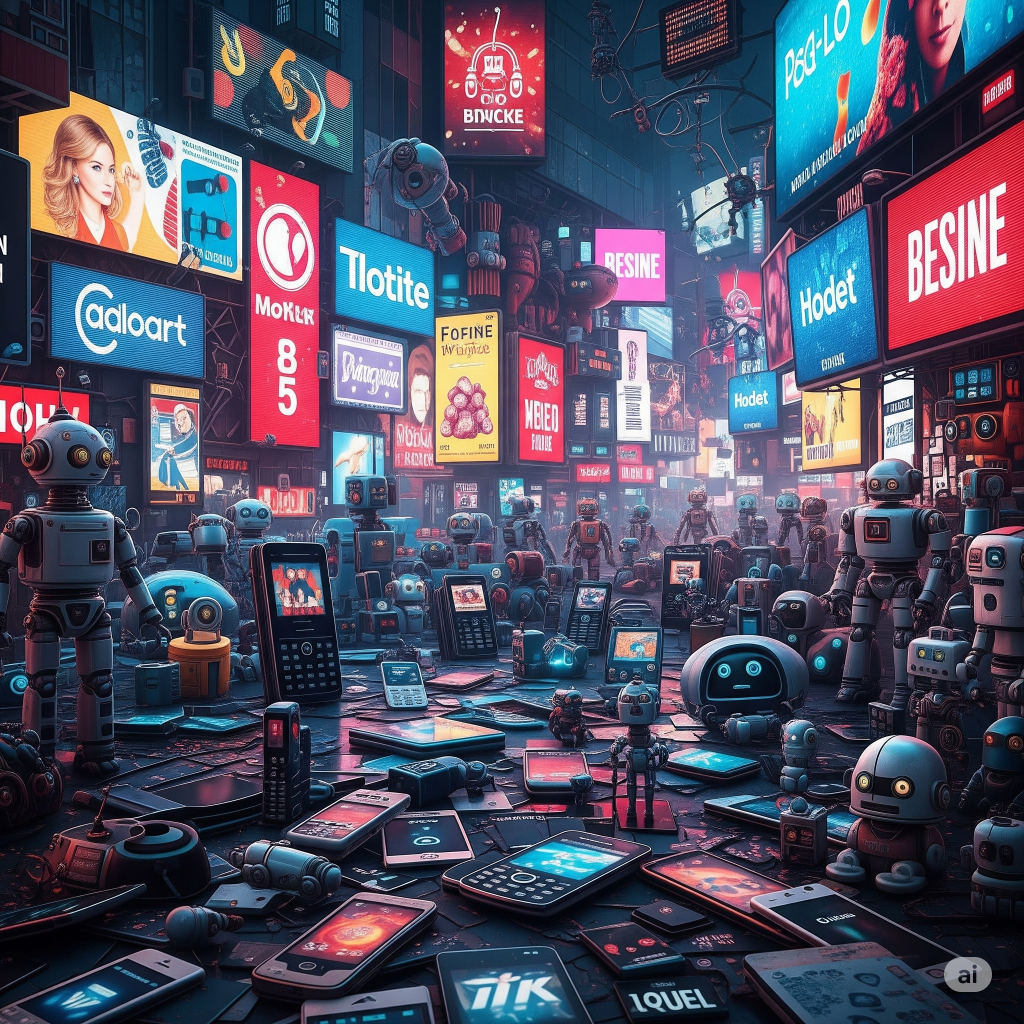
The AI Startup Bubble: From Marketing Hype to Personalized Intelligence

It feels like I can’t scroll for more than a minute without being served another one. A slick, fast-cut Instagram ad promising to revolutionize my life with artificial intelligence. One moment, it’s a tool that will turn my scattered video clips into a viral-worthy masterpiece, complete with perfectly synced, AI-generated background music. The next, it’s an app that writes my emails, designs my presentations, or even generates a photorealistic avatar of me as a Roman emperor. They all share the same breathless marketing copy and the same audacious claim: they are built on “the best A.I.”

As someone who has followed the field for years, I find this “Cambrian explosion” of AI startups to be both fascinating and deeply cynical. It’s a digital gold rush, and every developer with access to an API from OpenAI, Anthropic, or Google is seemingly staking a claim. They build a user-friendly interface—a wrapper—around a large language model (LLM) or a diffusion model, brand it with a futuristic name, and flood social media with ads. The barrier to entry isn’t building a foundational model, which costs billions; it’s building a slick user experience and having a hefty marketing budget.

And the money is pouring in. Depending on which market analysis you read, the generative AI market is already pulling in tens of billions of dollars in revenue in 2025, with some projections from groups like Bloomberg Intelligence estimating it could swell to over a trillion dollars within the decade. Every subscription fee, from the $9.99/month for an AI writing assistant to the $29.99/month for an advanced video editor, is a drop in this ever-growing bucket. The ads are relentless because the potential payoff is astronomical.

But this gold rush has a significant and messy byproduct: the pervasive and ever-growing mountain of “AI slop.” It’s everywhere. It’s the SEO-optimized blog posts that are grammatically correct but devoid of any real insight or human experience. It’s the bizarre, six-fingered hands and vacant eyes of AI-generated images that pollute forums and social feeds. It’s the generic, soulless background music in podcasts and YouTube videos. It’s the endless stream of automated comments on social media posts that say things like “This is a great point!” without a hint of context.

These tools, in their current state, are optimized for quantity, not quality. They lower the bar for creation, which in theory is democratic, but in practice often leads to a deluge of mediocrity. The incentive isn’t to create something meaningful; it’s to churn out content, to feed the algorithm, to simply produce. We’re drowning in a sea of plausible-sounding nonsense, and it’s making the digital world feel cheap, synthetic, and untrustworthy.

So, where do we go from here? While the current landscape is chaotic, I believe we’re in a necessary, if ugly, transitional phase. The future of AI, in my opinion, will not be defined by these generic, one-size-fits-all services all claiming to be “the best.” Instead, I see two critical directions emerging.

First is a move towards highly specialized, vertically-integrated models. An AI that is mediocre at writing emails, summarizing documents, and generating images is far less useful than three separate, highly-specialized AIs that perform each of those tasks with expert-level precision. We’ll see models trained specifically for legal contract analysis, for molecular biology, for semiconductor design, or for debugging a specific coding language. These won’t be consumer-facing toys but powerful, professional-grade instruments.

But the second direction is the one I find most compelling and, ultimately, more important. I believe the long-term future lies not with ever-larger, centralized models, but with smaller, personalized, and localized AI.

Imagine an AI that runs entirely on your own device, be it a phone or a laptop. It doesn’t send your data to a server in some far-off data center. It has been trained on a massive dataset, yes, but its true power comes from being fine-tuned on your data: your emails, your documents, your notes, your photographs, your chat history. It learns your unique style of writing, your specific vocabulary, the nuances of your professional relationships, and the context of your personal life.

When you ask this AI to draft an email, it won’t produce a generic corporate template; it will sound like you. When you ask it to find a photo, it won’t just search for “beach”; it will understand the implicit context and find that specific photo from your family vacation to the Outer Banks in 2019 that you were thinking of. This isn’t an AI meant to replace human creativity with a generic facsimile; it’s an AI designed to be a true digital assistant, an extension of your own mind and memory. It’s private, it’s efficient, and it’s authentically yours.

The current era of AI slop and overblown marketing is a feeding frenzy fueled by easy access to powerful but impersonal technology. The real revolution won’t be televised in a 30-second Instagram ad. It will arrive quietly, when our devices begin to understand us not as a generic user, but as an individual. That, to me, is the best A.I. worth waiting for.

Beyond AI: 2024’s Tech Breakthroughs That Didn’t Need Machine Learning

While Artificial Intelligence dominated headlines in 2024, the year saw a wealth of technological advancements that didn’t rely on algorithms and neural networks. These innovations spanned diverse fields, from medicine and energy to space exploration and consumer electronics. Here’s a look at some of the most noteworthy AI-free tech breakthroughs of 2024:

1. Brain-Computer Interfaces Take a Leap Forward:

Researchers at Stanford University and the BrainGate consortium achieved a remarkable feat in 2024, enabling a paralyzed patient to communicate at a record speed of 62 words per minute using a brain-computer interface (BCI). This breakthrough, utilizing implanted electrodes and sophisticated decoding software, offers renewed hope for individuals with severe speech impairments. While AI played a role in earlier BCI developments, this particular advancement focused on refining the signal processing and decoding techniques, demonstrating the power of bioengineering and neuroscience.

2. Quantum Computing Makes Strides:

Although still in its nascent stages, quantum computing witnessed significant progress in 2024. Companies like IBM and Google continued to push the boundaries of qubit technology, achieving greater stability and coherence. While practical applications remain on the horizon, these advancements lay the groundwork for future breakthroughs in fields like medicine, materials science, and cryptography. Notably, these advancements were primarily driven by progress in hardware and quantum algorithms, not by AI itself.  

3. High-Altitude Platform Stations (HAPS) Soar:

2024 saw increased interest in High-Altitude Platform Stations (HAPS), systems operating in the stratosphere to provide communication and observation capabilities. These platforms, which include balloons, airships, and fixed-wing aircraft, offer advantages over traditional terrestrial towers and satellites, particularly in remote areas. Advancements in solar power, battery technology, and lightweight materials have made HAPS a viable alternative for expanding connectivity and monitoring environmental changes.  

4. Elastocalorics: A Cool New Cooling Solution:

Elastocalorics, a cooling technology that utilizes the properties of shape-memory alloys, gained traction in 2024. These materials can absorb and release significant amounts of heat when deformed, offering a potentially more efficient and environmentally friendly alternative to traditional refrigeration. Researchers made progress in developing elastocaloric devices, paving the way for applications in air conditioning, electronics cooling, and even medical devices.  

5. Gene Editing with CRISPR Continues to Evolve:

CRISPR-Cas9 gene editing technology continued to advance in 2024, with researchers refining its accuracy and efficiency. While ethical concerns remain, CRISPR holds immense potential for treating genetic diseases and developing new disease-resistant crops. These advancements focused on improving the delivery and targeting of CRISPR systems, not on AI-driven applications.  

These are just a few examples of the many exciting technological advancements that emerged in 2024 independent of AI. While AI undoubtedly plays a transformative role in many fields, it’s important to recognize the continued progress driven by human ingenuity and scientific exploration across diverse disciplines.

Sources:

  • Brain-Computer Interface: Stanford University News Service, “Brain-to-text breakthrough: Paralyzed man sets record communication speed,” January 10, 2024.
  • Quantum Computing: IBM Research Blog, “IBM Unveils 1121-Qubit ‘Condor’ Processor, Pushing the Boundaries of Quantum Computing,” November 15, 2024.  
  • HAPS: World Economic Forum, “Top 10 Emerging Technologies of 2024,” June 26, 2024.  
  • Elastocalorics: ScienceDaily, “Elastocaloric Cooling: A Promising Alternative to Vapor Compression Refrigeration,” March 8, 2024.
  • CRISPR: Nature, “CRISPR technology: Applications and ethical considerations,” October 28, 2024.

Is It Worth It? AI’s Global Environmental Footprint: Energy, Water, and E-Waste

As of late, developments and advancements in AI seem to be coming at a feverish pace with seemingly no end in sight. From the major players like OpenAI, Google, Meta, and even Apple, down to the onslaught tools from companies formed seemingly out of nowhere, it literally seems there is no end on the horizon for AI.

However, if you’re like me, you find it all fascinating and often downright cool. But, like me, you may also inevitably find yourself pondering the same question that runs through my head from time to time: “Is it worth it?”

As a person who has always been fascinated with, and who has a career life in technology, I still hold on to the belief that technology should always help human life and not harm or replace it. So, in trying to keep up with all things AI, I have written about and spoken to professionals about many of the potential human-helping good things that AI can help with. However, in light of all that goes into these tools I can’t help but continue to ask the question “Is it worth it?” Not that I’m jumping on the “gloom and doom” bandwagon, but we simply can’t ignore the major negative side effects of AI technology and its development.

Generative AI, specifically models such as ChatGPT, Bing Copilot, and those powered by OpenAI, require vast amounts of energy for training and operation, raising concerns about their environmental impact.

The training process alone for a large language model like ChatGPT-3 can consume up to 10 gigawatt-hours (GWh) of power, which is roughly equivalent to the annual electricity consumption of over 1,000 U.S. households. This energy consumption translates to a substantial carbon footprint, estimated to be between 55 and 284 tons of CO2 for training ChatGPT-3 alone, depending on the electricity source.

Running these models also demands significant energy, albeit less than training. A single ChatGPT query can consume 15 times more energy than a Google search query. As AI, particularly generative AI, becomes more integrated into various sectors, the demand for more data centers to handle the processing power will increase. Data centers already account for about 1–1.5% of global electricity consumption and 0.3% of global CO2 emissions. This demand is projected to escalate, potentially leading to global AI electricity consumption comparable to the annual electricity consumption of Argentina and Sweden by 2027. Additionally, water consumption for cooling these data centers is another environmental concern, with estimates indicating global AI demand could be responsible for withdrawing 4.2–6.6 billion cubic meters of water annually by 2027.

The ICT sector, encompassing AI infrastructure, contributes to about 2% of global CO2 emissions. This contribution is expected to rise proportionally with the increasing use and development of generative AI models. While the financial aspects of these operations are substantial, with estimated daily operating costs for ChatGPT reaching $700,000, the environmental costs, particularly in terms of energy consumption and carbon footprint, are significant and warrant attention.

Electronic waste (e-waste) from AI technology includes harmful chemicals like mercury, lead, and cadmium.

These chemicals can leach into the soil and water, posing risks to human health and the ecosystem. The World Economic Forum (WEF) predicts that e-waste will exceed 120 million metric tonnes by 2050. Managing e-waste responsibly and recycling it is crucial to prevent environmental damage and limit the release of toxic substances. Stricter regulations and ethical disposal methods are necessary to handle and recycle e-waste associated with AI safely.

Global Impact of AI Training on Water Resources

Research indicates that global AI demand could lead to the withdrawal of 4.2 – 6.6 billion cubic meters of water by 2027. This projection surpasses the total annual water withdrawal of half of the United Kingdom. The issue of AI’s impact on water consumption, alongside other potential environmental effects, is often overlooked. The lack of data shared by developers contributes to this issue.

Water Consumption of ChatGPT

One report states that ChatGPT-3 consumes approximately 800,000 liters of water per hour. This amount of water is enough to fulfill the daily water needs of 40,000 people.

Factors Contributing to Water Consumption in Data Centers

Data centers, which house the servers and equipment for storing and processing data, require significant amounts of water for cooling and electricity generation. The increasing demand for AI services leads to a higher demand for data centers. Data centers account for about 1 – 1.5% of global electricity consumption and 0.3% of global CO2 emissions.

Reducing the Environmental Impact of AI

Several strategies can be implemented to reduce the energy consumption and environmental impact of AI systems like ChatGPT.

  • Enhancing the efficiency and design of hardware and software used for running AI models. One example is using liquid immersion cooling as opposed to air cooling, which can lower heat and minimize carbon emissions and water usage in data centers.
  • Powering data centers with renewable energy sources like wind, solar, and hydro power. Some countries, such as Norway and Iceland, have low-cost, green electricity due to abundant natural resources. Taking advantage of this, numerous large organizations have established data centers in these countries to benefit from low-carbon energy.
  • Limiting the use of AI models to essential and meaningful applications, avoiding their use for trivial or harmful purposes.
  • Increasing transparency and disclosing water efficiency data and comparisons of different energy inputs related to AI processes.

Need for Transparency and Accountability

There is a call for increased transparency regarding operational and developmental emissions resulting from AI processes. This includes disclosing water efficiency data and making comparisons between different energy inputs. Open data is essential to compare and assess the true environmental impacts of various language models, as well as the differences between them. For instance, a coal-powered data center is likely to be less energy-efficient than one powered by solar or wind energy. However, this assessment requires access to open data. A comprehensive evaluation should consider economic, social, and environmental factors. Community engagement, local knowledge, and individual understanding can be influential in persuading developers to share this data. Increased awareness of potential environmental impacts, along with the more widely discussed ethical concerns surrounding AI, could strengthen individual calls for a more accountable and responsible AI industry.

All said and done, and in consideration of the information that is available, it is difficult at best to answer the question as to whether or not AI will ever be “worth it”. In my opinion, we need more tangible, positive outcomes in order to truly have an answer. However, at this point in history, I’m finding it harder and harder to believe that there will ever be a viable payout to justify the amount of resources that are going into the development stages alone. I’m not calling for an overall halt to all AI development and usage (we’re far beyond that being a sensible answer), but I do believe we as a collective whole should agree to more efficient, less wasteful paths forward.