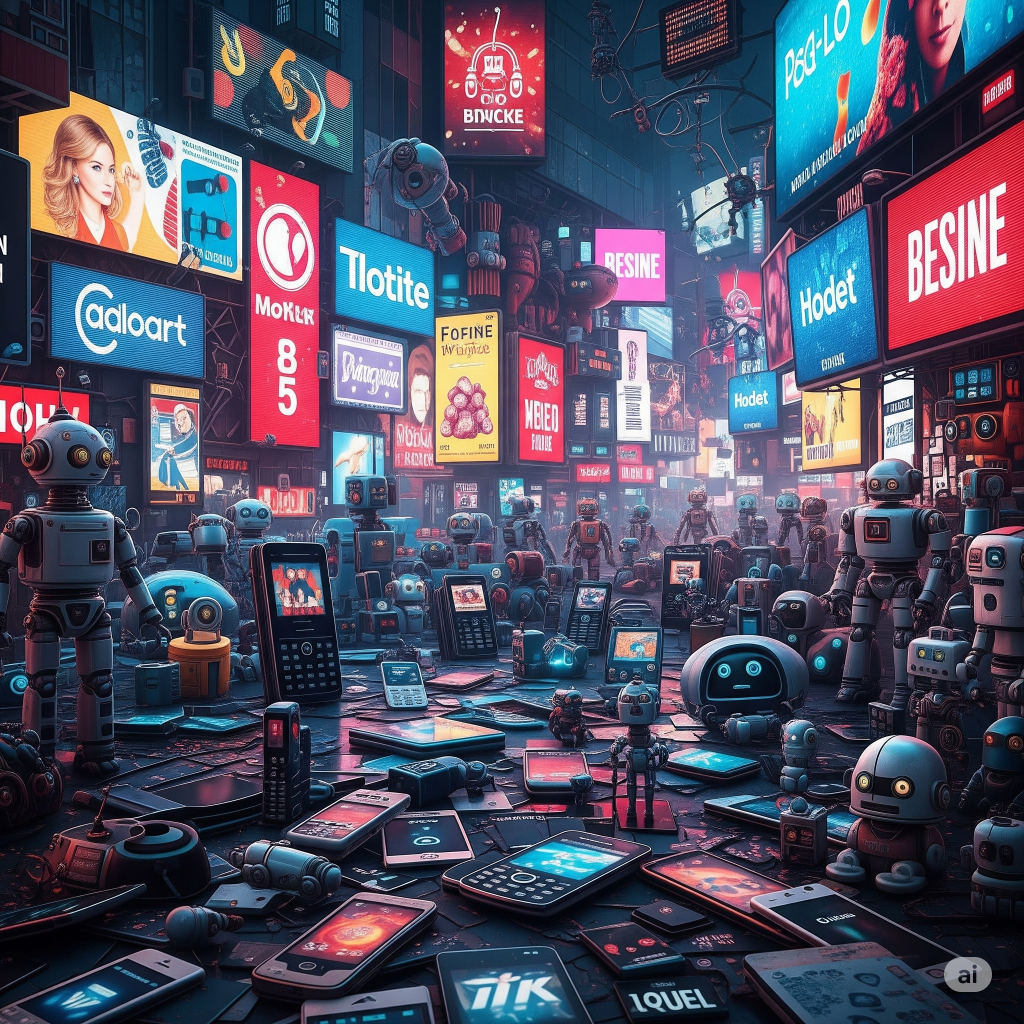
It feels like I can’t scroll for more than a minute without being served another one. A slick, fast-cut Instagram ad promising to revolutionize my life with artificial intelligence. One moment, it’s a tool that will turn my scattered video clips into a viral-worthy masterpiece, complete with perfectly synced, AI-generated background music. The next, it’s an app that writes my emails, designs my presentations, or even generates a photorealistic avatar of me as a Roman emperor. They all share the same breathless marketing copy and the same audacious claim: they are built on “the best A.I.”
As someone who has followed the field for years, I find this “Cambrian explosion” of AI startups to be both fascinating and deeply cynical. It’s a digital gold rush, and every developer with access to an API from OpenAI, Anthropic, or Google is seemingly staking a claim. They build a user-friendly interface—a wrapper—around a large language model (LLM) or a diffusion model, brand it with a futuristic name, and flood social media with ads. The barrier to entry isn’t building a foundational model, which costs billions; it’s building a slick user experience and having a hefty marketing budget.
And the money is pouring in. Depending on which market analysis you read, the generative AI market is already pulling in tens of billions of dollars in revenue in 2025, with some projections from groups like Bloomberg Intelligence estimating it could swell to over a trillion dollars within the decade. Every subscription fee, from the $9.99/month for an AI writing assistant to the $29.99/month for an advanced video editor, is a drop in this ever-growing bucket. The ads are relentless because the potential payoff is astronomical.
But this gold rush has a significant and messy byproduct: the pervasive and ever-growing mountain of “AI slop.” It’s everywhere. It’s the SEO-optimized blog posts that are grammatically correct but devoid of any real insight or human experience. It’s the bizarre, six-fingered hands and vacant eyes of AI-generated images that pollute forums and social feeds. It’s the generic, soulless background music in podcasts and YouTube videos. It’s the endless stream of automated comments on social media posts that say things like “This is a great point!” without a hint of context.
These tools, in their current state, are optimized for quantity, not quality. They lower the bar for creation, which in theory is democratic, but in practice often leads to a deluge of mediocrity. The incentive isn’t to create something meaningful; it’s to churn out content, to feed the algorithm, to simply produce. We’re drowning in a sea of plausible-sounding nonsense, and it’s making the digital world feel cheap, synthetic, and untrustworthy.
So, where do we go from here? While the current landscape is chaotic, I believe we’re in a necessary, if ugly, transitional phase. The future of AI, in my opinion, will not be defined by these generic, one-size-fits-all services all claiming to be “the best.” Instead, I see two critical directions emerging.
First is a move towards highly specialized, vertically-integrated models. An AI that is mediocre at writing emails, summarizing documents, and generating images is far less useful than three separate, highly-specialized AIs that perform each of those tasks with expert-level precision. We’ll see models trained specifically for legal contract analysis, for molecular biology, for semiconductor design, or for debugging a specific coding language. These won’t be consumer-facing toys but powerful, professional-grade instruments.
But the second direction is the one I find most compelling and, ultimately, more important. I believe the long-term future lies not with ever-larger, centralized models, but with smaller, personalized, and localized AI.
Imagine an AI that runs entirely on your own device, be it a phone or a laptop. It doesn’t send your data to a server in some far-off data center. It has been trained on a massive dataset, yes, but its true power comes from being fine-tuned on your data: your emails, your documents, your notes, your photographs, your chat history. It learns your unique style of writing, your specific vocabulary, the nuances of your professional relationships, and the context of your personal life.
When you ask this AI to draft an email, it won’t produce a generic corporate template; it will sound like you. When you ask it to find a photo, it won’t just search for “beach”; it will understand the implicit context and find that specific photo from your family vacation to the Outer Banks in 2019 that you were thinking of. This isn’t an AI meant to replace human creativity with a generic facsimile; it’s an AI designed to be a true digital assistant, an extension of your own mind and memory. It’s private, it’s efficient, and it’s authentically yours.
The current era of AI slop and overblown marketing is a feeding frenzy fueled by easy access to powerful but impersonal technology. The real revolution won’t be televised in a 30-second Instagram ad. It will arrive quietly, when our devices begin to understand us not as a generic user, but as an individual. That, to me, is the best A.I. worth waiting for.
 The good news is that Google also announced alternative watch bands available in the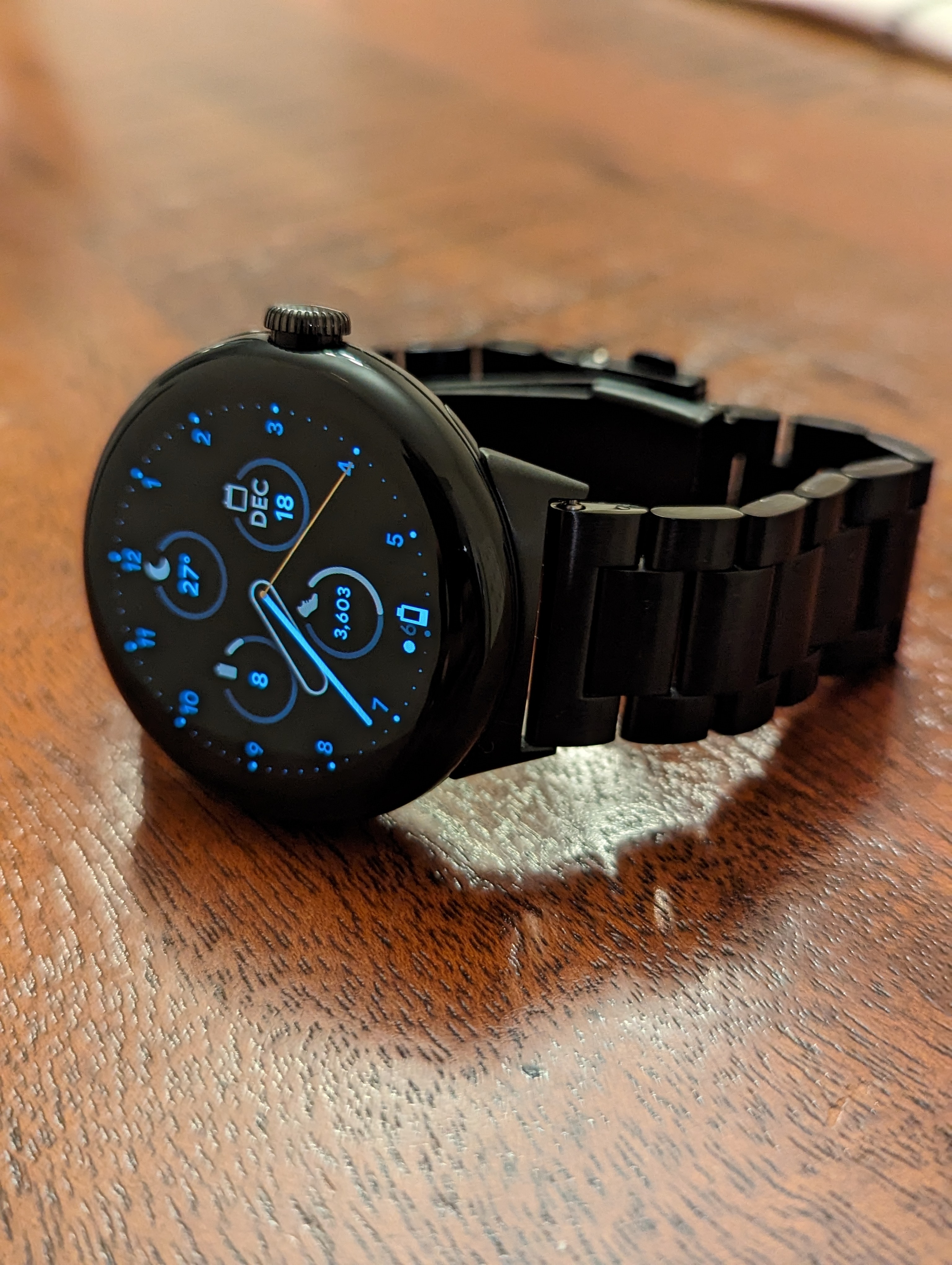





 Leo J. Allen Jr